

Joomla gallery extension by joomlashine.com
When you commit to the CBTR Process you help ensure that your test taking skills - including a confident, positive attitude - meet the bar preparation and performance standards necessary to pass the bar on your next attempt. We will work together to meet that challenge.
Download Video: MP4, WebM, Ogg
HTML5 Video Player by VideoJS
 |
Just Added |
- State Bar Testing Update
- COVID-19 - Feb 2020 Bar Results
- In Response To The Covid 19 Pandemic
- Date Of The Next California Bar Exam
- February 2020 Bar Results
- Essay Questions from the July 2017 California Bar Exam*
- First Year Law Students Exam Essay Questions from October 2017*
- More Information OnTaking The July 2017 Bar With Its New Changes
- Upcoming Changes To California Bar Will Not Make It Easier To Pass
- Prepare For 2017 Changes To California Bar Exam
- Hunting For Ruby's Woodpecker
- Story Trail / Pay It Forward
*Essay Questions from the July 2017 California Bar Exam and First Year Law Students Exam from October 2017 are reprinted from the State Bar of California website.
Law Student Journal Interview
Law Student Journal
Legal News & Academic Insights
Pfau talks about the bar's new subject matter and why candidates who know the law, still fail the California bar exam.
LSJ: First, a little bit about the new subject matter having been added. Many students are saying "Oh no! Three new subjects!" Is that really the case? Three new, full subjects?
PFAU: Well, the three new subjects that were just added are not entirely three full subjects. Part of the subject matter enhances some of the subjects that are presently on the bar exam. For Evidence, you now also need to know California Evidence. There are many similarities between the two. But there are some areas that are a little different. For example, in the area of privileges, there are typically many more areas in California than as is generally the case under the Federal rules of Evidence (FRE). And there are some other differences. But it isn't an overly tremendous burden in order to learn the differences involving the new California subject matter.
With respect to Civil Procedure, like Evidence, you need to now know the federal rules and the new California rules. Once again, there are many similarities. For example, you need to know subject matter jurisdiction, personal jurisdiction, and so forth. But those rules will vary from the federal to the California jurisdiction. The same overview, however, in terms of how Civil Procedure is organized, is generally the same. If you think about Civil Procedure as a subject that impacts the prosecution of a civil case, beginning with what court to bring the case to, what law to apply, choice of law, pretrial, trial, appellate, and final judgement issues, you can organize both the federal rules and California rules around those basic themes. Then, just know the variations on those themes as they relate to both the federal and California rules.
The only subject where new information, or where completely new subject matter is required, is the area of Business Associations, where, now, one needs not only to know Corporations, but also Agency & Partnership. However, many of those concepts will probably be familiar to students in other areas, such as respondeat superior, vicarious liability, and so forth. So, yes, there are "three new subject areas" -- with quotes around it, but all if it can be easily digestible depending on your approach to learning and understanding both the similarities and the differences.
LSJ: Will the new subject matter impact pass rates?
PFAU: Well, my comment, at best, will probably be anecdotal. There is some evidence that when the bar adds new subject matter, the par pass rates for the initial administration may at least be the same, if not a little better. So, in that regard, it can offer an opportunity to students who take the time to integrate the new subject matter with the current subject matter. Other than that, the new subject matter implicitly will affect pass rates if students don't learn it. So, it is important to begin to integrate that into the preparation process as soon as reasonably possible. But, once again, the subject matter does not create an unreasonable burden, given the similarity to the subject matter that is presently required on the exam. Keeping in mind, however, that part of an applicants grade is impacted by their competition through the "scaling process" - the new subjects can add an opportunity for those applicants who emphasize them in their preparation.
LSJ: The end of November is when bar results publish again. To me, many students are foolishly waiting for that day to start studying again. Any thoughts?
PFAU: Well, the culture of the bar preparation process, rightly or wrongly, generally causes students who are awaiting results to being studying once the results come out for those students who are unsuccessful. And part of that is understandable in terms of the tremendous amount of work that students undertake in getting ready for a bar and the need for some rest. From a logical standpoint, though, it is very prudent to start studying again as soon as possible. For example, if there is a month left until results, the student, even at a light duty standpoint, should begin to recalibrate there substantive understanding and memory of subjects and being to learn some of the new subject matter, so, that in the event they take the test again, they can have a running start. You don't have to give it the same intensity necessarily that you will in the weeks after bar results, but, if you can begin to integrate it on a casual, or even gentle basis, before hand, it can work to enhance one's skills in getting ready for the examination, and certainly won't do any harm if you pass the bar and you go off to practice.
LSJ: Any wisdom for students who do not see their name on the pass list? Simply studying more and memorizing more rarely is the cure next time around. Unfortunately, that is what many students do, however.
PFAU: Well, first, my empathy to all of those who are unsuccessful There is a tremendous amount of work involved in getting ready for the bar, and often in life we don't get what we want right then we want it. But, the prize will always go to those who are persistent in pursuing this great goal of passing the California bar exam.
In getting ready for the next bar exam, it is always important to try to learn from those lessons from a preceding exam in terms of how one might have prepared and performed on the test. And, whatever the course of action a student takes to get ready for the next bar, it is important to remember that you are getting ready for bar that requires very precise skills to be able to solve a problem under timed conditions. That is the essence of the California bar exam, and what is what makes it one of the most difficult in the nation.
And, so often going back to emphasizing a review of the substantive law, while it can put one a comfort zone in terms of thinking that maybe they didn't know enough law and that significantly more than anything else contribute to now passing, learning the other sills that will compliment ones substantive understanding and memory are as, if not more, as important. Learning how to organize better, learning how to write under timed conditions, learning how to see issues as they have a tendency to cluster, and learning how to organize a performance test, learning how to select the best answer a little bit better on the multistate. There are very definitive sills that can be added to one's substantive knowledge, which will tend to get one more precisely prepared and ready for the bar given its nature as a timed test. However one goes about it, all bar candidates should try to add those skills to their test-taking regimen. An, all the best. It's easy to empathize, having worked at this for many years, on success the next time around, however that occurs.
PAUL PFAUPaul Pfau is a Los Angeles County deputy district attorney and the owner of Cal Bar Tutorial Review, which has been customizing bar review programs for 33 years. For more information about Cal Bar Tutorial Review, call (800) 348-2401 or (800) 783-6168. Web site: www.cbtronline.com
Climbing Mt. Everest
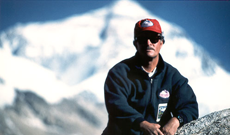
Paul Pfau, having tutored both repeat and first-time bar examines over the past 40 years, knows that passing the California Bar Exam is a herculean task. In fact, Pfau likens the pursuit of passing the exam to climbing Mt. Everest.
Who better to make that analogy than a man who has led numerous mountain-climbing expeditions all over the world, including the famous Mt. Everest?
"It's all in the planning," says Pfau. "it takes several months of planning before you even hike your first step. It's normally a two-year process. Long-range planning is the key."
Meet Michael Ehline

Michael Ehline joined the U.S. Marine Cops out of high school and has no college degree.
After his military service, he started a construction business and ran a health club until he heard of the Law Office Study Program.
Los Angeles Personal Injury Attorney, Michael P. Ehline, was able to become a lawyer without college, or a law school degree.
He passed the California Baby Bar Exam with no college and passed the California General Bar Exam with no J.D.
Law Student Reps Wanted
CALIFORNIA BAR TUTORIAL & REVIEW
EARN A FREE COURSE
Earn credit towards a FREE Course when you refer qualified candidates that enroll in the California Bar Tutorial & Review program - A common sense approach for raising your law school grades & passing the Bar Exam with an All-In-One-Common-Sense-Cost. Additional discounts may also be available for small groups or any charitable experience you may have contributed to others. As always, Cal Bar's policy is to pay it forward".
Translate

Share Us Please
CA Bar Exam Facts
Statewide Test Results
First Time Takers
about 57.2% Fail
Repeat Takers
about 77.1% Fail
All Takers
about 70.9% Fail
about 80.7% Fail
Still not sure you need help? View the full report.
Avoid a nightmare of bar exam failures. Call 1-800-783-6168 today!
CA Bar Exam Schedule
First Year Law Students
- June 25, 2019
Register by 5/15/2019
California Bar Exam
- Feb 26, 27, 2019
Register by 1/15/2019
Course Discounts
Note : This is our
40th Anniversary Year
Also, there are accompanying discount opportunities because of this.
Cal Bar’s “Pay It Forward” discount policy enables you to discount the cost of your individualized program if you have charitable experience in your background.
If you have no charitable experience, you may still qualify for a $1,000 discount from your totally personalized program – which includes old-fashioned one-on-one, materials, classes. Just ask.
Printable Flyers
Earn credit towards a FREE Course when you refer qualified candidates that enroll in the California Bar Tutorial & Review program - A common sense approach for raising your law school grades & passing the Bar Exam with an All-In-One-Common-Sense-Cost.
As always, Cal Bar's policy is to "pay it forward". Learn How
More Success For Ali
Cal Bar is pleased to announce that Ali Hinsche continued her remarkable run of success in having just passed the Florida bar exam.
This was her 4th (count 'em: 1, 2, 3, 4) successful bar - on her 1st attempt-following California, New York and Illinois.
While Ali worked with Cal Bar for each state, she also owes her success to persistence, hard work, and in learning how to adapt and apply the Cal Bar test-taking systems to the requirements of each bar exam.
 Specializing in English as a Second Language (ESL) and applicants with learning needs requiring special bar exam accommodations.
 I am writing to thank you for all the help you gave me while I was preparing for this past February's bar examination. I know I couldn't have done it without you.
E. Ericson
 Having trouble locating something on our website? Take a look at our Site Map or use the link at the top of every page to Contact Us. We would be glad to assist you.